
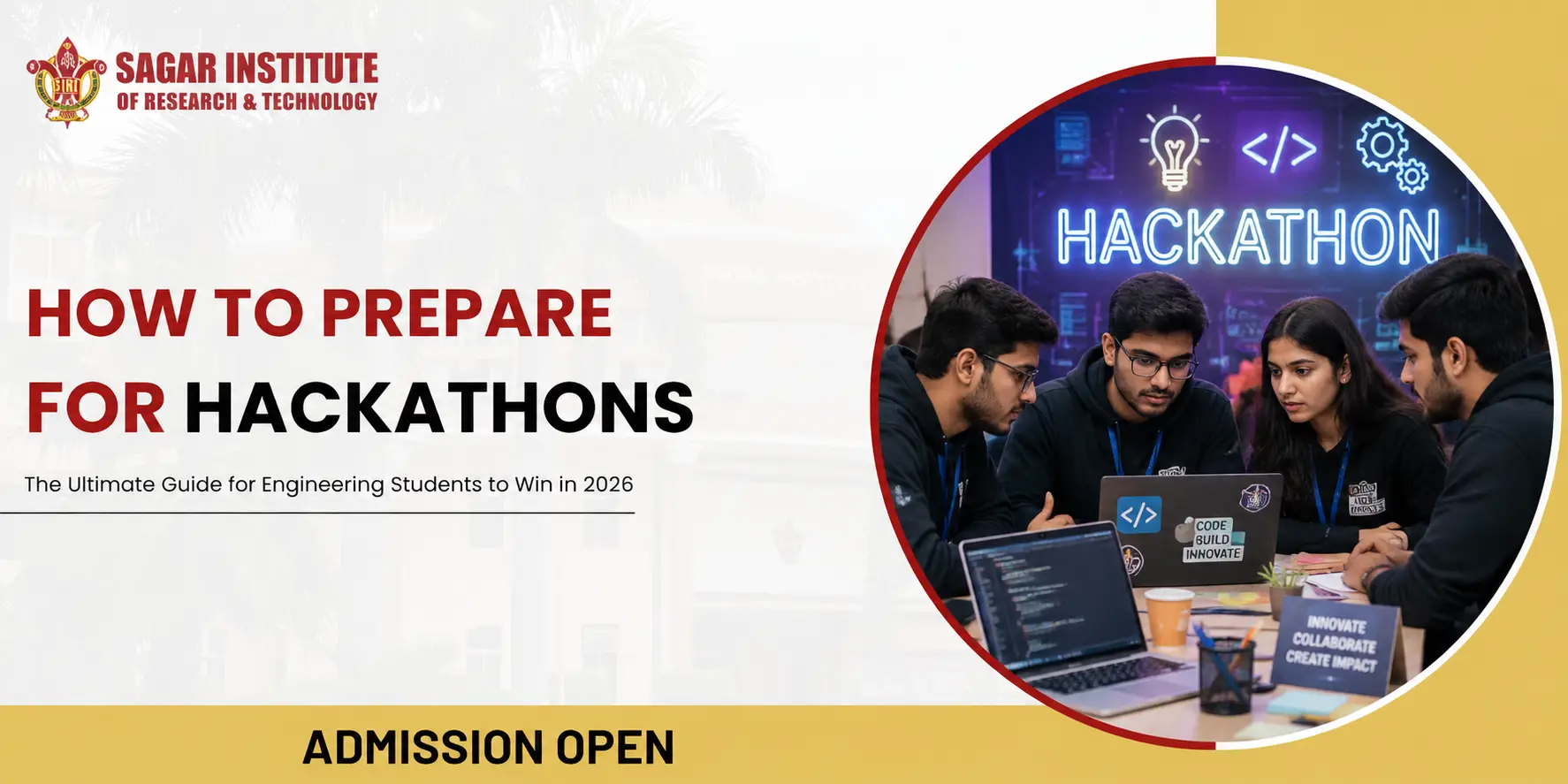
Every year, thousands of engineering students walk into hackathons hoping to win prizes, land internships, or simply prove they can build something real. Enthusiasm gets you in the door, but winning takes more than fast typing - it takes creativity, strategic thinking, teamwork, and the ability to ship a working solution under a hard deadline.
Hackathons have become one of the most effective ways for students to apply classroom knowledge to real problems. Companies, startups, universities, and government bodies now run them regularly - from the Smart India Hackathon to internal college events and corporate innovation challenges - specifically to spot people who can execute, not just theorize.
If you're wondering how to prepare, the honest answer is: build the right mix of technical skill, planning, collaboration, and presentation ability. Teams that prepare systematically routinely beat teams that are technically stronger but disorganized. This guide walks through exactly how to do that - from understanding judging criteria to picking a tech stack, managing 24–48 hours well, and presenting with confidence.
What is a Hackathon?
A hackathon is a time-bound innovation competition where individuals or teams design, build, and present a technology-driven solution to a real problem — usually within 24 to 72 hours.
Hackathons are no longer just about software. Modern events span AI, machine learning, cybersecurity, data science, cloud computing, IoT, blockchain, healthcare, fintech, smart cities, sustainability, agri-tech, and robotics. The goal isn't to write code for its own sake — it's to solve a meaningful problem through working, practical implementation.
Types of Hackathons
| Type | Description |
|---|---|
| Student Hackathons | Run by colleges and universities to encourage innovation among students. |
| Corporate Hackathons | Organized by companies to solve business challenges and scout talent. |
| Government Hackathons | Address public-sector and societal challenges, e.g. the Smart India Hackathon. |
| Startup Hackathons | Encourage entrepreneurs to build new products and business ideas. |
| Open Innovation Hackathons | Open to developers, designers, and innovators from any background. |
| AI & ML Hackathons | Focused on artificial intelligence, machine learning, and data-driven solutions. |
Trying a few different types exposes you to new technologies, expands your network, and gives you a broader sense of what "good" looks like across domains.
Why Engineering Students Should Participate in Hackathons
Hackathons offer far more than certificates and prize money — they're one of the fastest ways to close the gap between what you learn in class and what the industry actually expects.
• Practical, Hands-On Learning: Classroom theory is important, but building a working prototype under time pressure forces you to actually apply it — and that's what makes it stick.
• Sharper Problem-Solving: Every hackathon presents a different, unfamiliar challenge. You learn to analyze a problem, identify real user needs, and make quick decisions instead of overthinking.
• Exposure to Emerging Technology: AI, machine learning, cloud computing, blockchain, IoT, cybersecurity, and generative AI APIs all show up regularly in hackathon problem statements — a low-stakes way to get hands-on with tools before you need them for a job.
• Teamwork and Leadership: Winning teams need developers, designers, analysts, and presenters working in sync. You learn to communicate clearly, delegate, resolve conflict, and keep a team moving toward one goa
• A Stronger Resume and Portfolio: A hackathon project is proof of initiative and technical ability. Adding it to your resume, GitHub, or LinkedIn gives recruiters something concrete to ask about.
• Access to Industry Professionals: Judges are often engineers, founders, product managers, and tech leads. Good conversations at a hackathon have turned into mentorships, internships, and job leads more than once.
• Better Odds at Placements: Recruiters increasingly treat hackathon experience as evidence you can perform under pressure — something a transcript can't show.
Why Hackathons Matter More Than Ever in 2026
The technology landscape keeps shifting faster. Companies today are looking for people who can adapt quickly and solve real business problems — not just write correct code. Hackathons simulate exactly that environment: collaboration, experimentation, and rapid execution under a deadline.
Participating shows that you can think creatively under pressure, build functional prototypes fast, work across disciplines, present ideas to both technical and non-technical audiences, and pick up new technology on your own. As AI, automation, and cloud continue to reshape how software gets built, that combination has become a real differentiator for graduates chasing internships, placements, or their own startup idea.
How Hackathons Are Judged
Understanding the evaluation criteria is one of the most underrated parts of preparation. Winning teams don't just focus on technical execution — they focus on solving a meaningful problem in a way that's usable and convincing.
| Evaluation Criteria | What Judges Look For |
|---|---|
| Innovation | Originality, creativity, and uniqueness of the idea. |
| Problem Relevance | Whether the solution addresses a genuine real-world challenge. |
| Technical Implementation | Code quality, architecture, and technical complexity. |
| Working Prototype | A functional, stable, demonstrable product — not slides. |
| User Experience (UI/UX) | Ease of use, intuitive design, and overall satisfaction. |
| Scalability | Potential for future growth and wider adoption. |
| Business Impact | Practical value, sustainability, and commercial viability. |
| Presentation & Demo | Clarity, storytelling, confidence, and communication. |
| Team Collaboration | Coordination and role distribution throughout the project. |
10 Proven Steps to Prepare for Hackathons
Winning isn't about having the most advanced programming skills — it's about solving the right problem with the right approach, backed by real preparation. Here are the ten steps that consistently separate winning teams from the rest.
Step 1: Build a Strong Technical Foundation
You don't need to master every language or framework — you need to be comfortable enough with one complete stack to build a functional prototype quickly. A student who can confidently ship a full web app is usually more effective in a hackathon than someone with shallow knowledge of five different tools.
Step 2: Understand the Problem Before Writing Code
The single biggest reason teams fail is starting to code before they understand the problem statement. Successful teams spend the first hour or two on research and discussion — identifying the real problem, the actual users, and the core features — before anyone opens an editor.
Instead of asking "What can we build?", ask:
• Who is facing this problem?
• Why does this problem exist?
• What are the users' pain points?
• What solution would create the most value?
• Can we solve it within the hackathon timeline?
A Simple Problem-Solving Framework:
1. Understand the problem statement.
2. Research the target users.
3. Identify pain points.
4. Brainstorm multiple ideas.
5. Evaluate the feasibility of each solution.
6. Select the most practical approach.
7. Build a Minimum Viable Product (MVP).
8. Improve the solution as time allows.
Hackathons reward practical innovation — not unnecessary complexity.
Step 3: Build the Right Team
A winning team is rarely four programmers with identical skills. It's a mix of complementary expertise, with each person clear on their role from day one.
| Role | Responsibilities |
|---|---|
| Backend Developer | APIs, databases, authentication, server-side logic |
| Frontend Developer | User interface, responsiveness, user experience |
| AI/ML Developer | Machine learning models, analytics, AI integration |
| UI/UX Designer | Wireframes, design consistency, user journey |
| Presenter / Team Lead | Planning, coordination, documentation, final presentation |
Traits of a winning team: clear communication, mutual trust, respect for each other's ideas, quick decision-making, accountability, and a level head under pressure.
Step 4: Practice Working Under Time Pressure
With only 24–48 hours on the clock, there's little room for trial and error. The best preparation is a mock hackathon — run a compressed version of the real thing with friends or classmates before the actual event.
Mock runs surface weaknesses in planning, communication, and development early, and consistently translate into better teamwork, faster decisions, and stronger presentations when it counts.
Step 5: Master Git and Version Control
Losing eight hours of work because someone overwrote the latest version happens more often than students expect — and it's entirely avoidable. Every team member should be comfortable creating and cloning repos, committing regularly, branching, resolving merge conflicts, and managing pull requests.
| Without GitHub | With GitHub |
|---|---|
| Conflicting code changes | Organized collaboration |
| Difficult file sharing | Easy version management |
| Risk of losing work | Automatic backups |
| No change history | Complete project history |
| Manual coordination | Streamlined teamwork |
Best practices: commit frequently with meaningful messages, branch for new features, review before merging, and keep the main branch stable. It's a small habit that also signals professionalism to judges reviewing your repo afterward.
Step 6: Choose Your Tech Stack Before the Hackathon
Deciding on technology after the event starts is one of the most common — and costly — mistakes. Installing software, configuring environments, and learning unfamiliar frameworks all eat into your 24–48 hours. Lock in a stack the whole team understands in advance, based on the likely theme, your team's actual expertise, and the time available. Simple and reliable beats complex and unfinished, every time.
| Hackathon Type | Recommended Tech Stack |
|---|---|
| Web Development | React.js, Node.js, Express.js, MongoDB |
| Artificial Intelligence | Python, TensorFlow, OpenAI API, Hugging Face |
| Mobile App Development | Flutter, Firebase, Android Studio |
| Data Science | Python, Pandas, NumPy, Scikit-learn |
| Cyber Security | Kali Linux, Wireshark, Burp Suite |
| Cloud Computing | AWS, Microsoft Azure, Google Cloud Platform |
| IoT | Arduino, Raspberry Pi, Firebase |
| Blockchain | Solidity, Ethereum, MetaMask |
A dependable default for most student hackathons: React.js on the frontend, Node.js + Express on the backend, MongoDB or Firebase for data, Firebase Auth, Vercel or Netlify for hosting, GitHub for version control, Figma for design, and Postman for API testing.
Step 7: Create an Intuitive User Experience (UI/UX)
Plenty of technically strong projects lose simply because judges can't figure out how to use them. With dozens of projects to review in a short window, first impressions matter more than you'd think.
• Keep the interface clean and uncluttered.
• Use consistent fonts and colors.
• Make buttons and menus easy to understand.
• Design for both desktop and mobile.
• Highlight the primary features clearly.
• Reduce unnecessary clicks.
• Focus on accessibility and readability.
Useful tools: Figma, Canva, Adobe XD, Miro, and Whimsical. Sketching wireframes before you start coding saves a lot of design-related back-and-forth later.
Remember: A beautiful interface alone won't win a hackathon, but a poor one can undercut an otherwise excellent solution.
Step 8: Master Time Management
Time management is often the real deciding factor. Even a brilliant idea fails if the team spends too long planning or chasing unnecessary features instead of shipping a working MVP first and enhancing it if time allows.
| Time | Activity |
|---|---|
| First 2 Hours | Understand the problem and plan the solution |
| Next 3 Hours | Design UI and finalize architecture |
| Next 10 Hours | Develop core features |
| Next 4 Hours | Integrate modules and APIs |
| Next 2 Hours | Testing and debugging |
| Last 3 Hours | Prepare presentation and documentation |
Prioritize must-have features, divide tasks clearly, set internal deadlines, and reserve real time for testing and presentation — not just development. A working prototype with fewer features consistently beats an ambitious one that isn't finished.
Step 9: Deliver a Winning Presentation
Judges typically spend only a few minutes per team, which makes your demo and storytelling just as important as the build itself. Skip the line-by-line code walkthrough and focus on demonstrating value.
Your presentation should answer:
• What problem are you solving?
• Why does this problem matter?
• Who benefits from your solution?
• How does the application actually work?
• Which technologies did you use, and why?
• What makes your solution different?
• How could it scale in the future?
Start with a compelling problem statement, demo live wherever possible, keep technical explanations concise, and end with confidence. Keep slides simple, practice multiple times, split speaking roles across the team, and maintain eye contact — a confident presentation can outweigh a marginally stronger technical build from another team.
Step 10: Prepare Professional Documentation
Documentation gets skipped constantly, but it's often what judges (and later, recruiters) actually read. A README, installation guide, architecture diagram, API docs, database schema, screenshots, and a short demo video all signal professionalism — and double as portfolio material long after the event ends.
Key Takeaways from the 10 Steps:
• Build strong technical skills before you arrive.
• Understand the problem thoroughly before writing code.
• Form a balanced team with complementary skills.
• Practice through a mock hackathon.
• Use Git and GitHub for real collaboration.
• Lock in your tech stack in advance.
• Prioritize UX alongside technical implementation.
• Manage time ruthlessly — a working MVP beats an unfinished ambitious build.
• Practice your presentation as seriously as your code.
• Keep documentation clear and complete throughout.
30-Day Hackathon Preparation Plan
If it's your first hackathon, four weeks of structured prep can make a real difference to your confidence and performance on the day.
| Week | Focus Area |
|---|---|
| Week 1 | Learn Git, GitHub, APIs, and strengthen programming fundamentals. |
| Week 2 | Build a small web or mobile application using your chosen tech stack. |
| Week 3 | Run a mock hackathon with friends and practice your presentation. |
| Week 4 | Polish UI/UX, revise core concepts, study past winning projects, and prep your toolkit. |
By the end of it, you'll have sharper technical skills, real teamwork experience, and a lot more confidence walking in.
Winning Teams vs. Losing Teams
| Winning Teams | Losing Teams |
|---|---|
| Understand the problem before coding | Start coding immediately |
| Focus on a functional MVP | Attempt too many features |
| Divide responsibilities clearly | Everyone works on everything |
| Use familiar technologies | Experiment with unfamiliar tools |
| Test continuously | Leave testing until the end |
| Practice presentations | Ignore communication skills |
| Keep documentation updated | Forget documentation |
| Work collaboratively | Poor team coordination |
Hackathon Essentials Checklist
Technical Essentials
• Laptop and charger
• Extension board
• Internet backup (mobile hotspot)
• GitHub account
• Development environment installed
• Required software and SDKs
• API keys
• Cloud platform accounts
Team & Presentation Essentials
• Defined roles
• Communication channel (Discord, Slack)
• Task tracker (Notion or Trello)
• Shared GitHub repository
• Presentation slides
• Demo video (optional)
• Project documentation / Screenshots
• A tight elevator pitch
“Winning a hackathon is not about writing the most code — it's about solving the right problem with creativity, teamwork, and effective execution. Teams that plan well, build practical solutions, and communicate their ideas confidently consistently outperform those that focus only on technical complexity.”
— Dr. Praveen Kumar KaithalCommon Mistakes to Avoid (Quick Recap)
Most of these come down to skipping a step already covered above — but they're worth stating plainly, because they're the mistakes that most often knock otherwise-strong teams out of contention.
• Coding before understanding the problem: Rushing to build without agreeing on who the user is and why the problem matters.
• Chasing too many features: Ask “which feature creates the most value?” instead of “what else can we add?” A polished MVP beats a crowded, half-finished app.
• Ignoring UX: Judges experience your product as a user first, code second.
• Weak team communication: Skipping regular check-ins leads to duplicated work and last-minute surprises. A quick sync every hour or two prevents most of this.
• Skipping testing: Login, API calls, database operations, and mobile responsiveness all deserve a real test pass before you present — not just a hope it works.
• Underpracticed presentations: Even strong projects lose when the team can't explain them clearly.
• Poor time management: Long debates early in the event eat into build time. Done is better than perfect.
• Skipping documentation: Judges often review your repo after the pitch. A messy or empty README undercuts an otherwise strong project.
• Learning new tools mid-competition: A hackathon is the wrong place to learn a new framework from scratch.
• Giving up when something breaks: Servers fail and APIs go down. The teams that stay calm and adapt are usually the ones still standing at the end.
Where to Build These Skills: The Role of Your Institution
None of this happens in a vacuum — the environment you learn in shapes how ready you are when a hackathon clock starts ticking. At Sagar Institute of Research & Technology (SIRT), Bhopal, students are encouraged to move beyond classroom learning and apply their knowledge through coding competitions, innovation projects, hackathons, and industry-oriented activities, backed by an industry-aligned curriculum covering AI, machine learning, data science, cybersecurity, cloud computing, IoT, and full-stack development.
That plays out through hands-on work — mini and major projects, industry assignments, innovation challenges, and coding competitions — supported by experienced faculty mentors who help students pick project ideas, choose the right technologies, sharpen software architecture, and prepare presentations. Advanced computer labs, AI & ML labs, and dedicated project development spaces give students room to actually build and test, rather than just study theory.
The payoff shows up at placement time. Recruiters increasingly look past exam scores for evidence that a candidate can build working software, solve real problems under pressure, and collaborate — the exact abilities hackathons make visible. A well-documented hackathon project on GitHub, LinkedIn, or a portfolio site often becomes the strongest talking point in a placement interview, and the skills behind it (programming, cloud, API integration, and just as much leadership, communication, and time management) are what carry students from the classroom into the workplace.
Frequently Asked Questions (FAQs)
Ans: Most hackathons allow teams of 3 to 5 members with complementary technical and non-technical skills.
Ans: Yes, Many hackathons welcome beginners, and participating early helps build practical experience and confidence.
Ans: There's no single best language. Python, JavaScript, Java, and C++ are the most common because of their versatility and strong community support.
Ans: Most run 24, 36, or 48 hours, though some innovation competitions extend over several days or weeks.
Ans: No, Judges generally evaluate a functional Minimum Viable Product (MVP) that clearly demonstrates the core idea and its impact.
Ans: Yes, They strengthen your resume, improve technical skills, build your GitHub portfolio, and demonstrate the problem-solving ability recruiters value.
Ans: Strengthen your programming fundamentals, learn Git and GitHub, build small projects, practice teamwork, and try a mock hackathon before the real one.
Ans: Your laptop, charger, extension board, an internet backup, project files, presentation materials, and any required software or API credentials.
Ans: Yes, Many hackathons welcome designers, business analysts, product managers, researchers, and domain experts who contribute to ideation, UI/UX, documentation, and presentation.
Ans: There isn't a single one. Winning teams combine innovative thinking, practical problem-solving, real teamwork, time management, a polished prototype, and a confident presentation.
Final Thoughts
Hackathons are much more than coding competitions — they're a chance to innovate, collaborate, and turn an idea into something real. Every one of them pushes you to think creatively, adapt quickly, and work well under pressure, which is exactly what makes better engineers.
Technical skill matters, but preparation, teamwork, communication, and execution matter just as much. Students who participate consistently build confidence, strengthen their portfolios, grow their network, and gain experience that pays off in higher education, entrepreneurship, internships, and career growth.
Whether this is your first hackathon or you're aiming for a national-level win, treat every event as a chance to learn and improve. Focus on solving a problem that matters, build something practical, and treat feedback as part of the process.
Dr. Praveen Kaithal
Assistant Professor
Department of Computer Science and Engineering
SIRT Bhopal
Ready to build the next big innovation?
At Sagar Institute of Research & Technology (SIRT), Bhopal, students get the curriculum, hands-on exposure, and faculty mentorship needed to compete confidently in hackathons and coding competitions — and to carry those skills into the workplace afterward.